
Some mornings you know exactly what to wear. Most mornings you don’t — you’re standing in front of a full closet insisting you have nothing to wear to work. If that’s you, you’re not alone: most advice on how to build a business casual wardrobe is written for one narrow idea of ‘office’ that doesn’t match how most of us actually work anymore.
This guide covers real business casual outfits for women navigating real work weeks — desk days, client meetings, on-your-feet jobs, and the in-between days that don’t fit either category.
Where to Start When Building a Business Casual Wardrobe
The truth about how to build a business casual wardrobe is that it starts with understanding what ‘business casual attire’ actually means today.
“business casual wardrobe attire” used to mean one thing: suits, blazers, closed-toe heels. That definition hasn’t matched most workplaces in years. Today, business outfits fall into a few real categories, and knowing which one applies to your day is the fastest way to stop overthinking your closet. SHRM’s business casual wardrobe attire guidance breaks workplace dress codes into similar tiers, which is a useful frame for building your own wardrobe around. That’s really what how to build a business casual wardrobe comes down to — pieces you’ll actually reach for.:
- Business formal — client-facing meetings, interviews, presentations
- Business professional — standard office days, most corporate environments
- Smart business casual — hybrid offices, creative industries, casual-but-polished workplaces
- Active/on-your-feet work — retail, healthcare-adjacent, education, anything requiring movement and durability
The goal isn’t to own a separate wardrobe for each — it’s to have a handful of pieces that flex across categories depending on what you layer or swap.
Smart casual Business Attire for Women, by Work Type
Corporate / Traditional Office

Smart business attire here means tailored, structured pieces that read as put-together without effort:
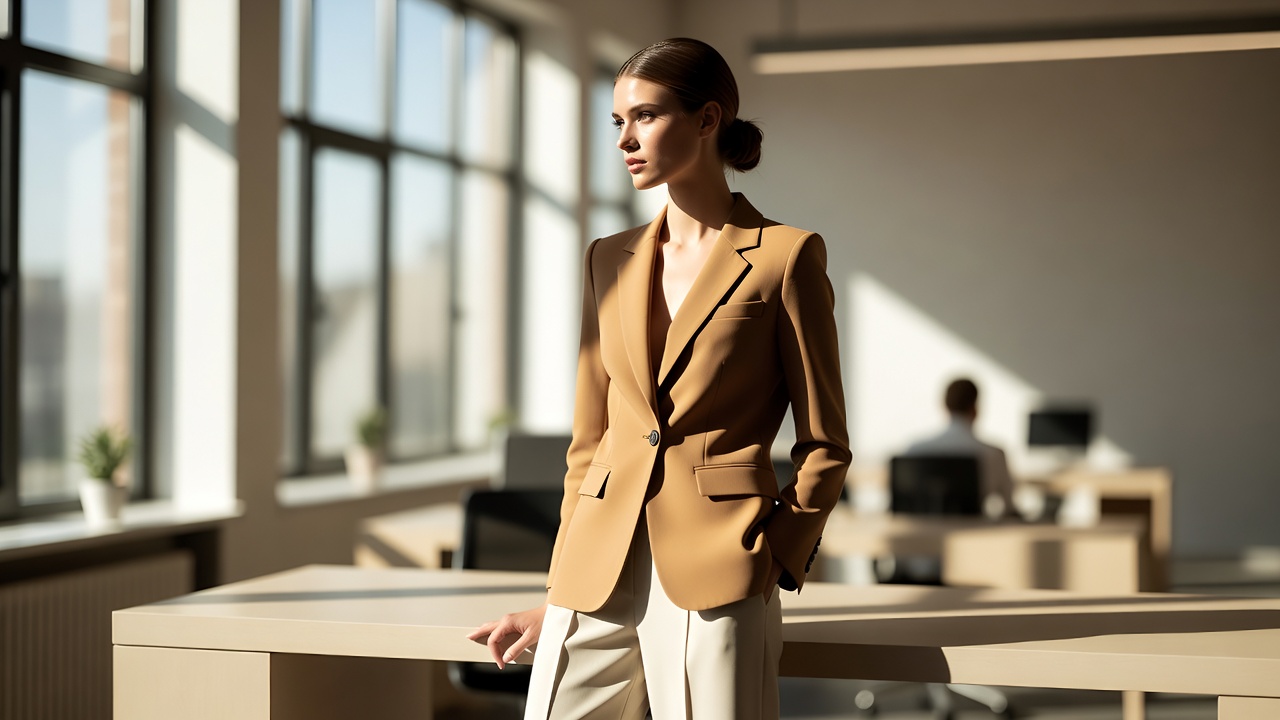
- A well-tailored blazer in a neutral (navy, charcoal, camel)
- Straight or wide-leg trousers that don’t need ironing daily
- A silk or silk-blend blouse that layers under the blazer
- Closed-toe flats or low block heels for full-day comfort
Hybrid / Creative Office

Smart business casual leans less structured, more textured:
- A knit blazer or cardigan instead of a stiff structured jacket
- Dark denim or tailored trousers, depending on your office’s actual norms
- One statement piece (a print blouse, a bold color) to keep it from reading as loungewear
Client-Facing / Presentation Days
This is where business professional attire earns its name — err formal, not casual:
- A matching set (blazer + trouser or skirt) reads as intentional and put-together
- Minimal jewelry, closed-toe shoes, and a structured bag signal preparedness
Work Outfit Ideas for Every Day of the Week

Building work outfit ideas around a weekly rhythm — rather than reinventing each morning — is the single biggest time-saver in a work wardrobe:
- Monday (meetings-heavy): Blazer, trousers, blouse — your most polished look to start the week strong
- Tuesday/Wednesday (desk-heavy): Knit top, tailored trousers, flats — comfortable enough for a full day at a desk
- Thursday (varies): A dress with a cardigan — one piece, minimal decisions, still polished
- Friday (casual-but-still-work): Dark denim, blouse, blazer optional — dressed down without looking off-duty
Business Professional Attire for Meetings and Interviews

For interviews or high-stakes meetings, business professional attire benefits from a few non-negotiables:
- Fit over trend. A well-fitted $50 blazer outperforms a trendy $200 one that doesn’t sit right on the shoulders.
- Neutral palette. Navy, charcoal, black, and camel photograph and read as more authoritative on camera and in person.
- One polished detail. A structured bag, a simple watch, or clean shoes — pick one thing to signal attention to detail, rather than accessorizing everything at once.
Durable Work Clothing for Active or On-Your-Feet Jobs

durable work clothing for active jobsNot every job means sitting at a desk. Durable company clothing for active jobs needs to hold up differently than desk-day pieces:
- Fabric that moves — ponte knit, four-way stretch, or wrinkle-resistant blends over stiff structured fabric
- Real shoes — supportive flats, low block heels, or leather sneakers if your workplace allows them; a full day on your feet in the wrong shoe undoes any outfit
- Machine-washable everything — dry-clean-only pieces don’t survive a job where spills and movement are part of the day
- Layers you can shed — a cardigan or light jacket you can remove rather than one fixed temperature all day
Building a Business Outfit Capsule on a Budget

You don’t need a full wardrobe overhaul to build reliable business outfits. A working capsule needs surprisingly few pieces:
- 2 blazers (one structured, one knit/soft)
- 3 pairs of trousers (1 tailored, 1 wide-leg, 1 dark denim for casual days)
- 4–5 tops that layer under blazers or stand alone
- 1 versatile dress
- 2 pairs of shoes (1 flat, 1 low heel)
Mixed and matched, that’s roughly 15–20 distinct outfits from about a dozen pieces — you’ll actually reach for. For outfit-by-outfit inspiration, see our 10 work outfits that mean business
FAQ
What are the best business outfits for women who stand or move all day?
Fabrics with real stretch (ponte knit, ponte-blend trousers) and supportive, closed-toe shoes matter more than tailoring here. Machine-washable pieces also hold up better to a physically active workday than dry-clean-only items.
What’s the difference between business professional and business casual attire?
Business professional is more formal — matching sets, structured blazers, minimal accessories — and is best for interviews, client meetings, and presentations. Business casual allows softer fabrics, more color, and less structure while still reading as put-together.
How many pieces do I actually need for a work wardrobe?
A capsule of roughly 12 pieces (2 blazers, 3 bottoms, 4–5 tops, 1 dress, 2 pairs of shoes) can realistically produce 15–20 different business outfits when mixed and matched.
What should I wear for a job interview if I’m not sure of the dress code?
When in doubt, dress one level more formal than what you’d wear on a normal day at that company — a matching blazer and trouser set is rarely the wrong call for an interview.
Looking for more everyday style guidance? Browse our full Fashion & Beauty Finds collection for more work-ready picks.
Read Also:
10 Work Outfits for women That Mean Business Without Trying Too Hard.