
In this post: what actually makes a bed feel like a hotel bed, the layering system to copy, thread count and weave (do they matter?), the small touches guests remember, and answers to the questions we get asked most.
There’s a specific feeling you get climbing into a bed at a good boutique hotel — cool sheets, a bed that looks impossibly full without feeling heavy, a pillow that’s somehow exactly right. It’s not luck. It’s a formula, and it has almost nothing to do with the size of the room or the cost of the wallpaper. It comes down to the guest bedding itself: the layers, the fabric, and a handful of small decisions repeated consistently, bed after bed, room after room.
If you’ve got a guest room — or even just a pull-out couch that becomes a guest bed twice a year — this is the guide to giving it that same feeling. Nothing here requires a renovation. Just a smarter approach to guest bedding.
Why Guest Bedding Matters More Than Guest Room Decor
It’s tempting to spend your guest room budget on furniture and art. But ask anyone who’s actually stayed in a well-appointed guest room what they remember, and it’s rarely the nightstand. It’s how the bed felt. A guest room with mismatched throw pillows and a genuinely excellent bed will always beat a beautifully styled room with a mediocre one.
That’s good news for a quiet-luxury-on-a-budget approach: bedding is one of the highest-impact, lowest-cost upgrades you can make to a guest room. You don’t need to replace furniture. You need to replace — or properly layer — what’s on top of the mattress.
The Layering System Hotels Actually Use
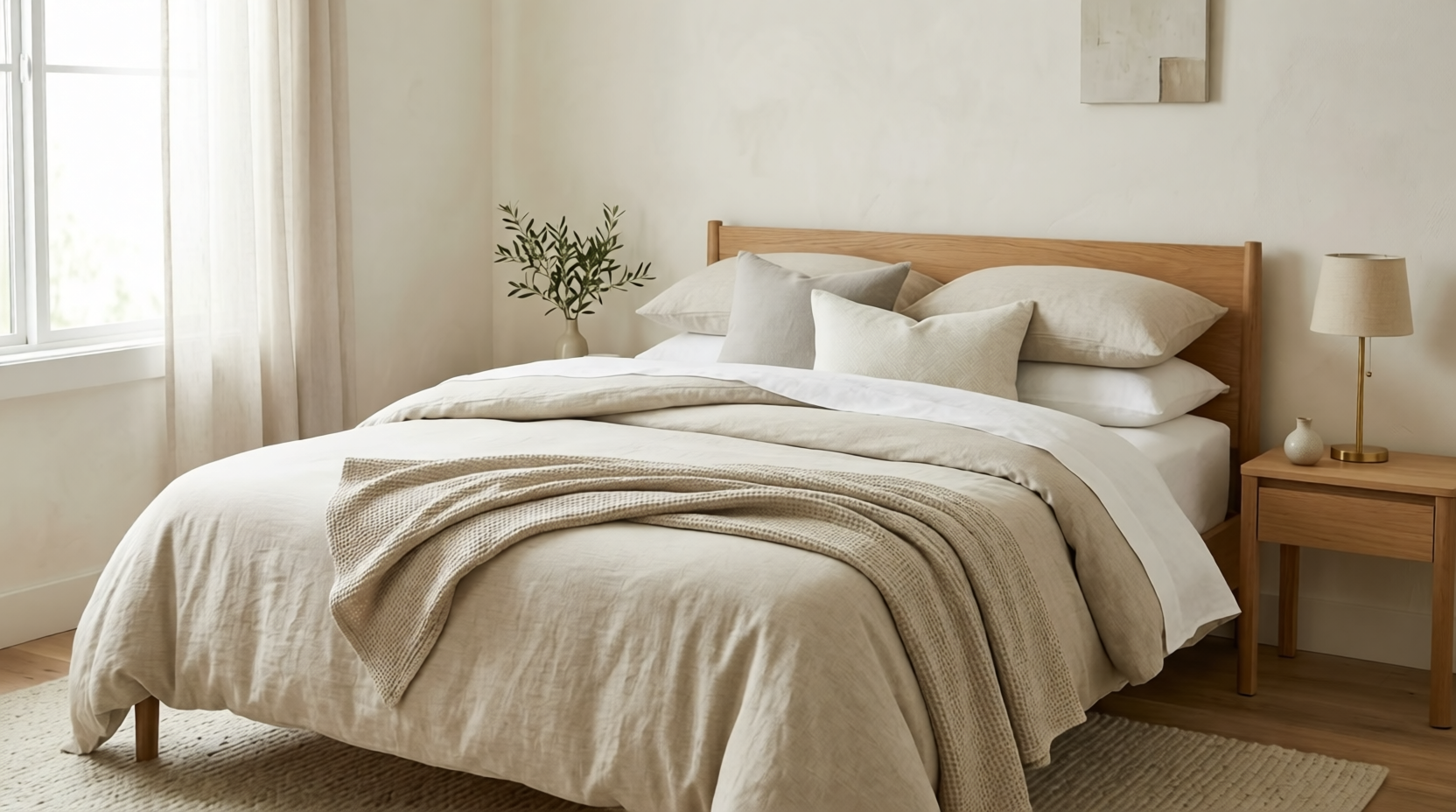
Hotel beds look full because they’re built in layers, not because the comforter is thicker. Here’s the order, from the mattress up:
1. A fitted sheet in a neutral tone. White remains the classic choice because it reads as clean and calm, but soft ivory, oatmeal, or warm greige work just as well for a quiet luxury palette and hide the occasional stain better.
2. A flat sheet, tucked with a hospital corner. This is the detail most home beds skip — and it’s the one that makes the bed feel “made” rather than just covered.
3. A lightweight blanket or coverlet. This middle layer is optional in warm climates, but it’s what gives a hotel bed its slightly structured, tailored look before the duvet goes on.
4. A duvet or comforter, always in a duvet cover. Skip a bare comforter — a proper duvet insert inside a crisp cover is what creates that slightly puffed, cloud-like top layer. Fold it back a third of the way down the bed for the classic “turn-down” look.
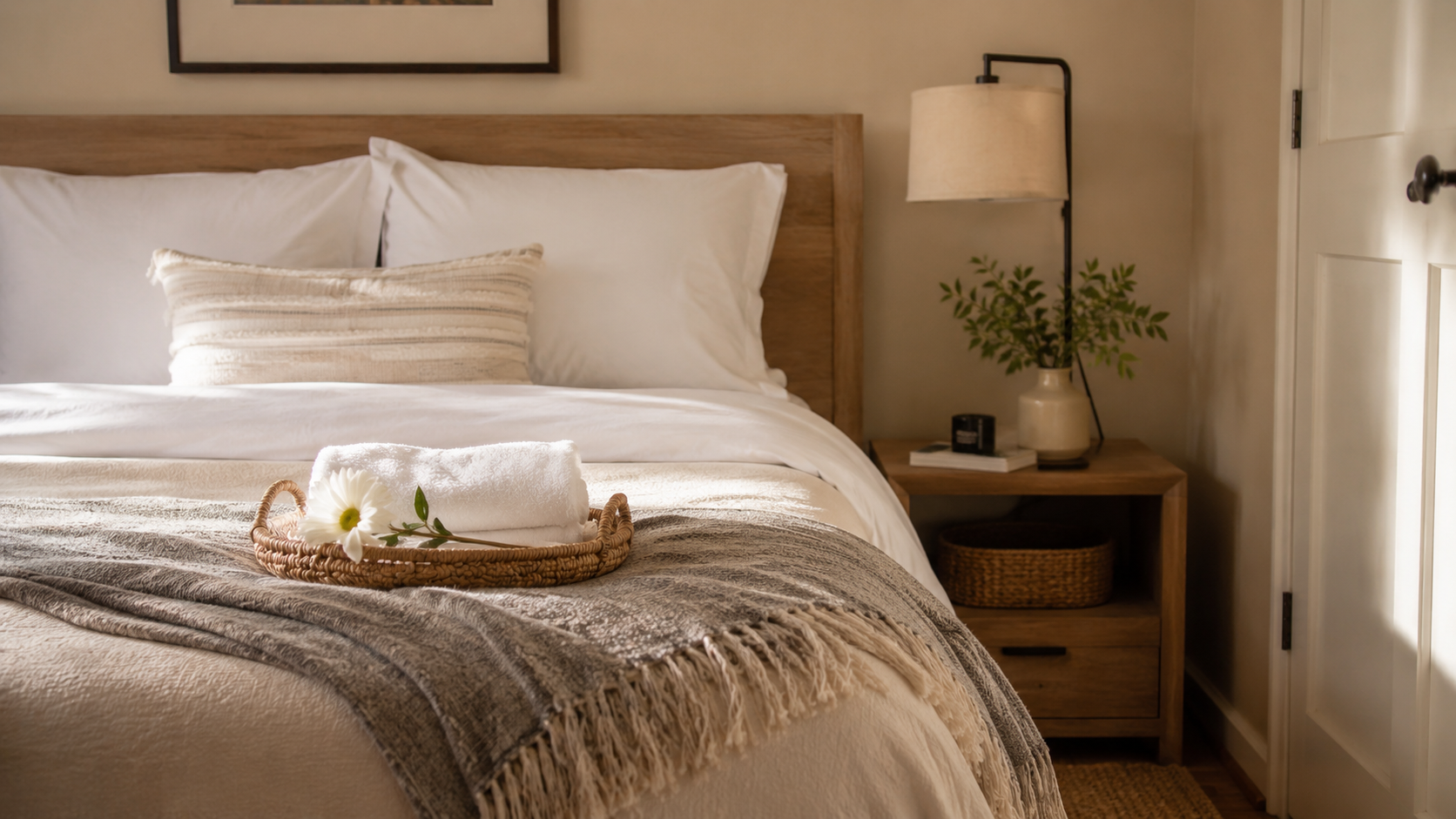
5. A folded throw or bed runner across the foot. This is the single most photographed detail in hotel bed styling, and it’s also the easiest one to add to a bed you already have.
6. Pillows, layered by size. Two firmer sleeping pillows in the back, two softer decorative pillows in front, and — if you want the full effect — one small lumbar or accent pillow on top.
None of these layers need to be expensive individually. It’s the combination and the consistency that reads as “boutique hotel” instead of “spare bed with extra blankets.”
Does Thread Count Actually Matter?
Short answer: less than you’d think, and less than most packaging wants you to believe. Weave matters more than the number on the label.
- Percale has a crisp, matte, cool-to-the-touch feel — closer to a very good dress shirt. It’s the choice if your guests (or you) tend to sleep warm.
- Sateen has a slight sheen and a softer, silkier drape, closer to how higher-end hotel sheets often feel. It runs a little warmer.
A well-made percale or sateen sheet in a mid-range thread count will outperform an overpriced ultra-high-thread-count set made from lower-quality fibers. If you’re shopping on a budget, prioritize the weave and fiber (cotton, linen, or a cotton blend) over chasing the highest thread count number you can find.
The Small Touches Guests Actually Notice
- A folded throw at the foot of the bed — instant polish, almost no cost if you already own one
- Two pillow sizes, not four identical ones — layering, not matching, is what creates the look
- A neutral, low-key scent near the nightstand or on the linens themselves — something clean and unobtrusive rather than heavily floral, since strong scents can be a turn-off for guests with sensitivities
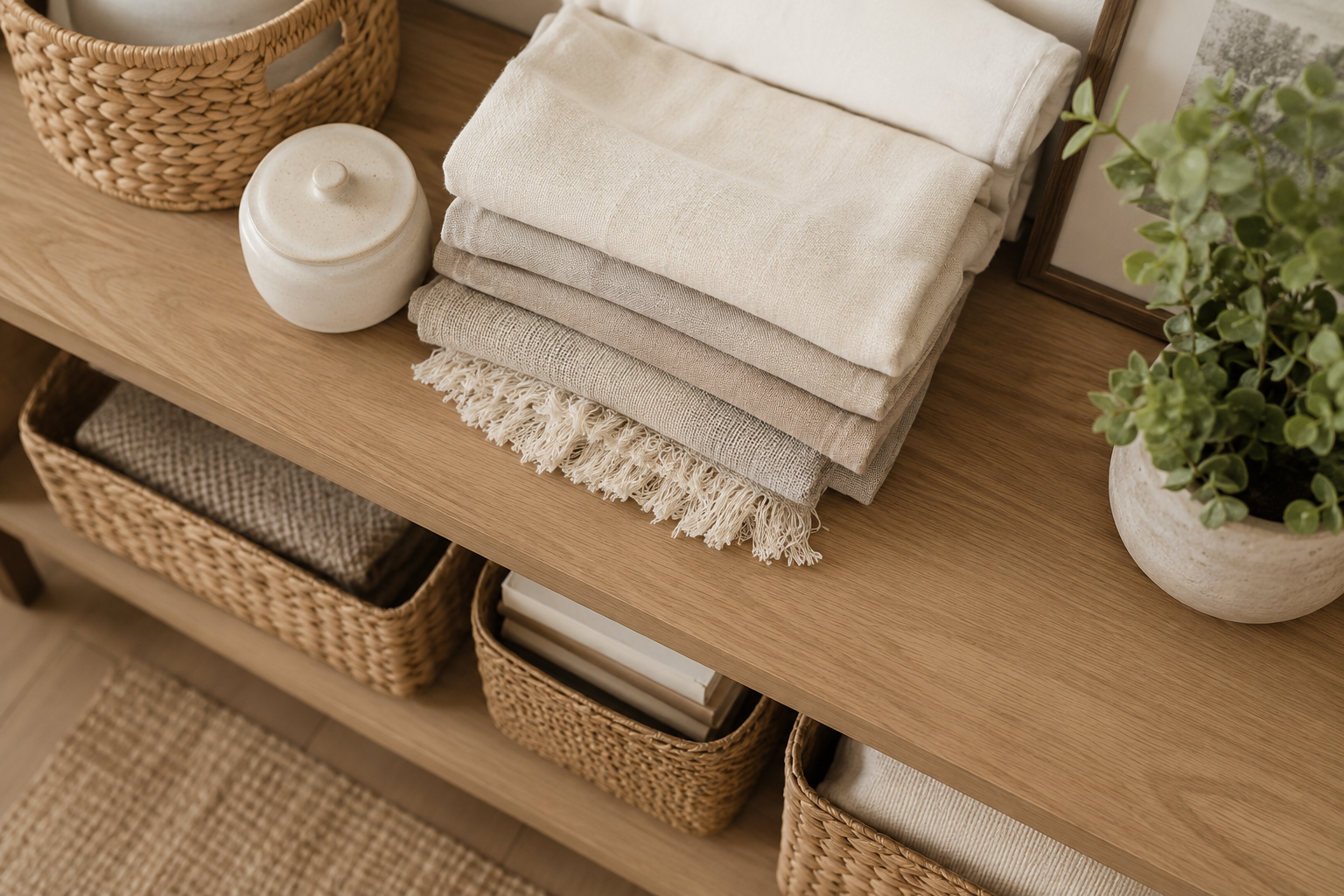
- A spare blanket, visibly folded, at the end of the bed or in a basket nearby, so guests don’t have to ask
- Crisp, freshly pressed linens — even a quick pass with a handheld steamer before guests arrive makes a noticeable difference in how “finished” the bed looks

Building the Set Without Overspending
You don’t need five complete sets like a working hotel does — most homes only need two: one on the bed, one in the wash. Build in this order of priority:
- A well-fitting sheet set in a neutral tone that matches your home’s palette
- One good duvet insert with a washable cover (the cover is what wears out first, so buying the insert once and covers as needed stretches your budget further)
- A folded throw or coverlet for the foot of the bed
- Two pillow sizes for the layered look

Avoid anything busy — florals, logo-heavy branding, or anything that reads more “novelty gift set” than “quiet luxury.” A restrained, tonal palette is what makes budget bedding look expensive; pattern and branding are what give away the price point.
A Simple Guest Bedding Checklist
- Fitted sheet in a neutral tone
- Flat sheet, tucked with hospital corners
- Duvet insert + washable cover
- Optional lightweight blanket or coverlet for structure
- Throw or runner folded at the foot of the bed
- Two sleeping pillows + two decorative pillows
- Spare blanket, visible and accessible
- Fresh, pressed linens before guests arrive
Frequently Asked Questions
What thread count is best for guest bedding? There’s no single “best” number — anywhere from around 300 to 600 in a genuine percale or sateen weave, in good quality cotton or a cotton-linen blend, will feel excellent. Focus on weave and fiber quality over chasing the highest thread count on the label.
How many sets of guest bedding do I actually need? Two is enough for most homes: one on the bed, one in the wash. If you host frequently or have multiple guest rooms, three lets you rotate without laundering in a rush between visits.
What color bedding looks the most “hotel”? Neutral tones — white, ivory, oatmeal, soft grey, or warm greige — read as the most polished and calming. They’re also the most forgiving to layer and the easiest to keep looking fresh.
Is a duvet or a comforter better for a guest room? A duvet insert with a washable cover is generally more practical for guest rooms, since you can wash just the cover between guests rather than laundering an entire comforter.
Do I need a top sheet if I have a duvet? It’s optional, but including one gives guests a choice of warmth and adds the crisp, tucked layer that makes hotel beds look intentionally made rather than just covered.
The Takeaway
A boutique-hotel guest room isn’t about spending more — it’s about layering with intention: the right order, a restrained neutral palette, and a few small, repeatable touches that make a guest bed feel considered rather than assembled at the last minute. Start with the sheets and the duvet, add the throw, and the rest follows.
Read Also : Post in Our Style Finds