
Quiet luxury multifunctional furniture isn’t really a price category — it’s a design philosophy that happens to show up most clearly in pieces that do more than one job. The whole idea of quiet luxury is that quality announces itself through restraint, not signals. Multifunctional furniture is an unusually good test of that principle, because a piece that transforms has two chances to give itself away as cheap: once at rest, and once mid-transformation. Quiet luxury pieces pass both tests without you noticing there was a test at all.
That’s a different question than “how much does it cost.” A $200 storage bench can embody quiet luxury design principles more fully than a $2,000 piece that’s engineered beautifully but still visually announces its own cleverness. Here’s what the philosophy actually asks of a piece, and how to spot it.
What Quiet Luxury Multifunctional Furniture Actually Means

Quiet luxury, applied to any object, rests on three ideas: nothing is there to be noticed for its own sake, quality is felt rather than announced, and the object doesn’t need a story told about it to justify its presence. Applied to multifunctional furniture specifically, this means the second function should feel almost incidental — present, useful, but never the reason the piece exists in the room.
This is the opposite instinct from most furniture marketing, which tends to lead with the transformation as the selling point: “converts to a bed!,” “expands to seat 10!” Quiet luxury multifunctional furniture buries that information. The product listing might mention it. The piece itself never does.
The Three Tells of Quiet Luxury Design in Transforming Furniture

No visible mechanism at rest. A console table that becomes a desk, a bench that opens to reveal storage — in its closed state, it should read as a complete, intentional piece of furniture with no visual hint that it does anything else. If you can identify the “trick” by looking at it sitting still, the design hasn’t fully succeeded.
No branding or logo anywhere on the piece. This matters more for multifunctional furniture than almost any other category, because manufacturers often use branding to explain or justify the mechanism (“Smart-Fold Technology,” a badge near the hinge). Quiet luxury pieces let the engineering speak for itself, with no label needed to explain what it does.
Materials chosen for how they age, not how they photograph. A quiet luxury piece is usually upholstered or finished in something that improves with wear — leather that develops a patina, solid wood that takes on character, rather than a finish engineered to look perfect only in the first six months. This matters especially at hinge points and transition edges, which take the most visible wear over time. This reflects a broader shift in interior design toward material sustainability — choosing pieces that age well rather than degrade, the same principle that separates quiet luxury from disposable design more generally.
Where the Philosophy Shows Up Best

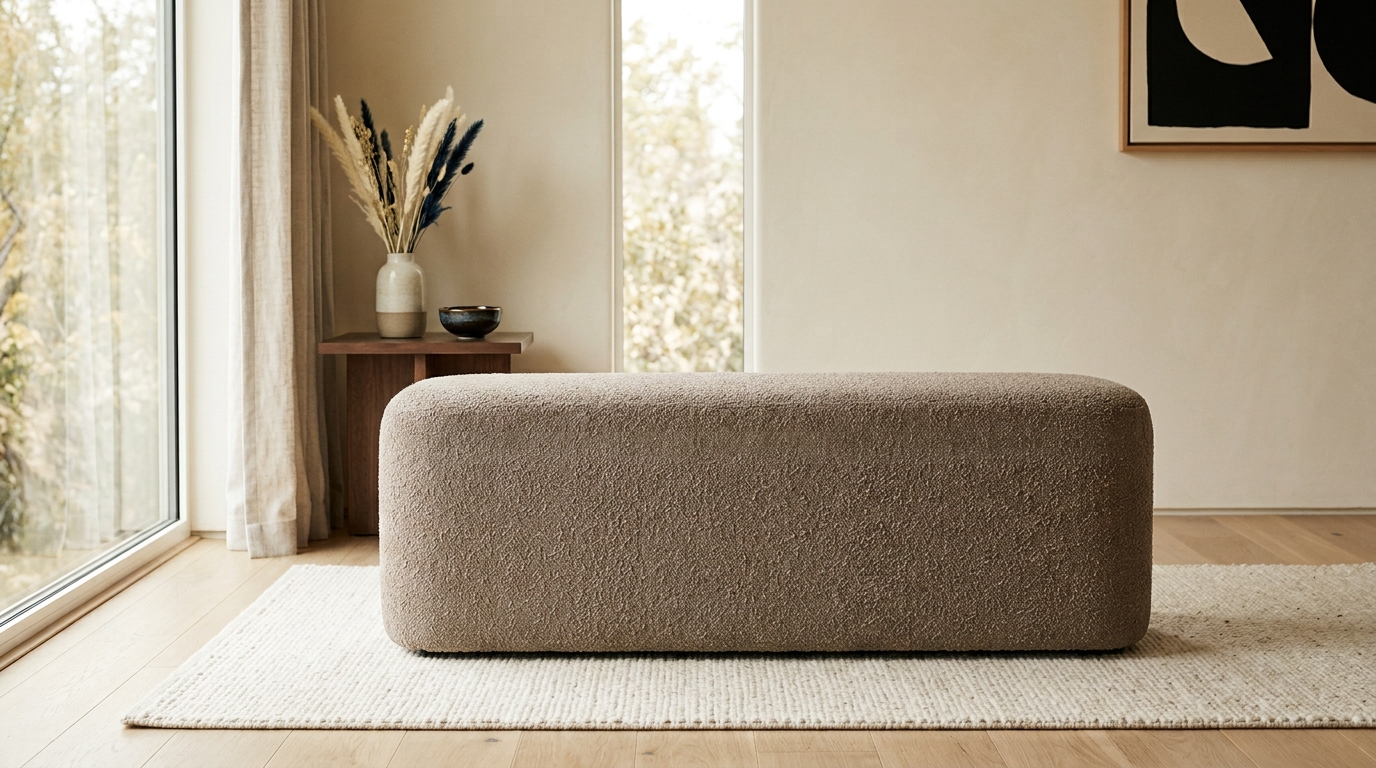
Storage benches over storage ottomans. A bench with a hinged seat that opens to reveal storage, upholstered in a single continuous fabric with no visible seam at the hinge, embodies the philosophy more completely than most ottomans, which tend to have a visible top-panel seam that gives away the mechanism even when closed.

Console-to-dining tables finished identically on every surface. The quiet luxury test here is simple: does the underside of the extended leaf match the finish quality of the visible top? Budget versions often finish only what’s normally seen. A piece that finishes what’s usually hidden is telling you something about how it was made.

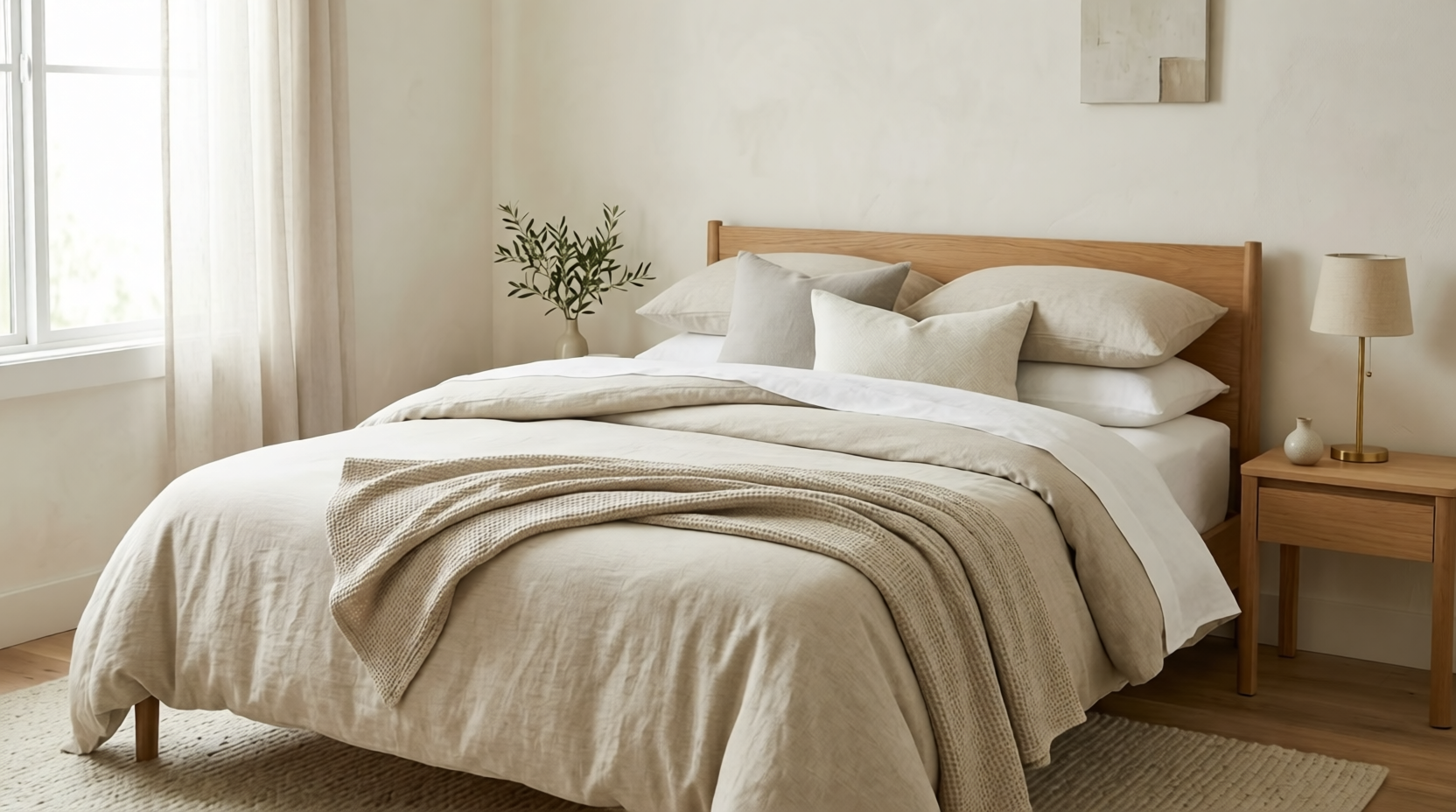
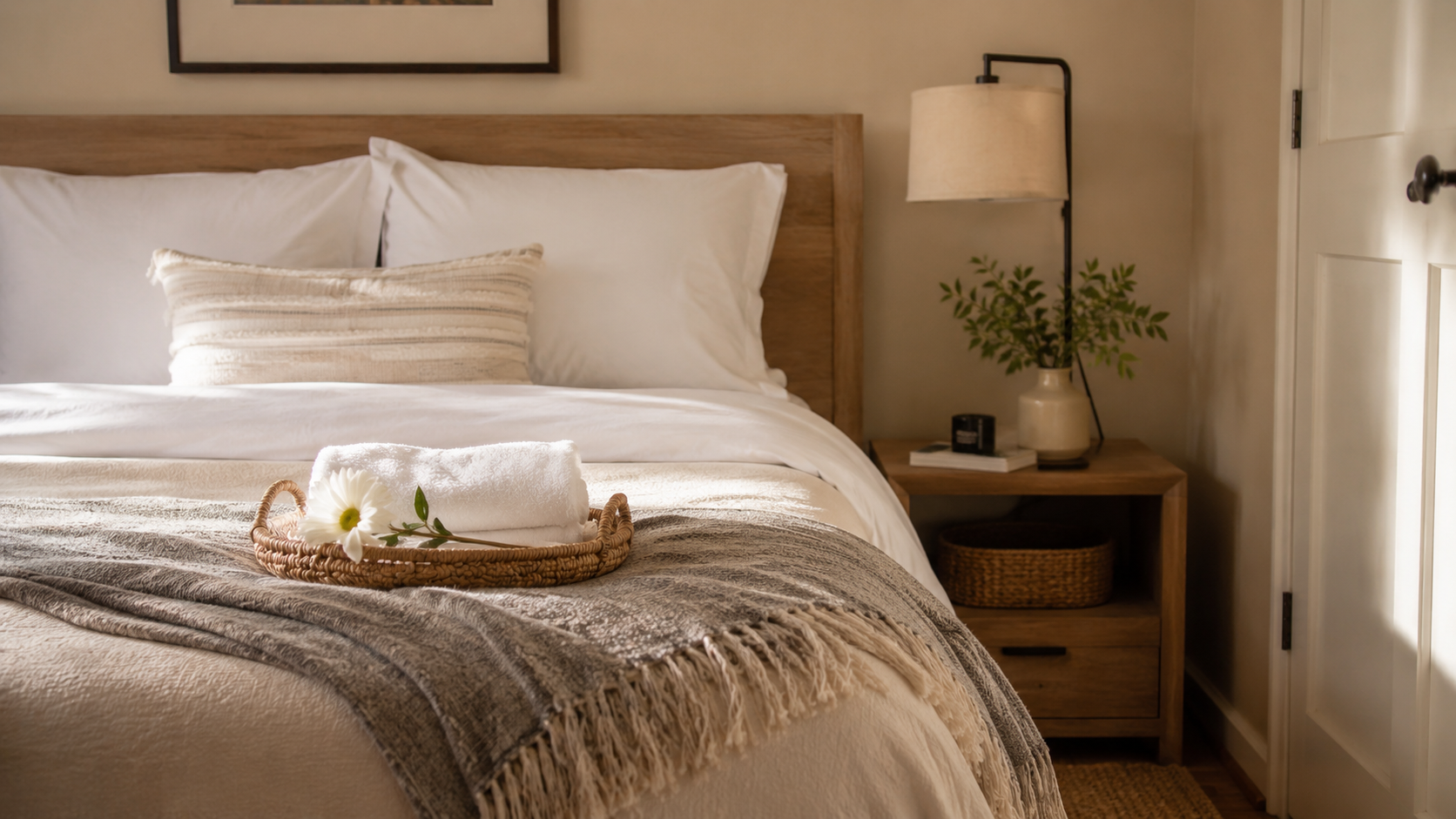
Beds with drawer fronts in the exact frame material. Not a matching stain — the exact same wood or finish, continuous with the headboard and frame, so the storage drawers disappear into the silhouette rather than reading as an added feature.
Wall-mounted or fold-away desks with no visible folding hardware. The best of these use a concealed piano hinge or a mechanism entirely internal to the cabinetry, so a closed desk reads as a cabinet or shelf — never as “a desk that folds.”
Why This Matters More in Small Spaces

Quiet luxury multifunctional furniture earns its keep especially in smaller homes, where a piece is visible from nearly every angle, nearly all the time. A loudly-transforming piece in a large house can hide in a room you’re not currently in. In a studio or a one-bedroom, every piece of furniture is on permanent display, which makes the “does it announce its own cleverness” question far more consequential than it would be in a larger home.
For more on applying this philosophy across a whole room, see our guide to building a quiet luxury capsule wardrobe — the same restraint principles apply directly to furniture, not just clothing.
Frequently Asked Questions
Is quiet luxury multifunctional furniture always more expensive? Not necessarily — the philosophy is about restraint and material honesty, not price. A well-chosen mid-range piece with no visible mechanism can embody the principle more fully than an expensive piece that still visually announces its own transformation.
How is this different from just buying “nice” multifunctional furniture? Quiet luxury specifically means the piece doesn’t market its own cleverness — no branding near the mechanism, no visual “look what I can do” moment. A nice piece can still show its seams; a quiet luxury piece hides them.
Does quiet luxury multifunctional furniture cost more to maintain? Often less, since the materials chosen (solid wood, genuine leather, quality hardware) tend to age rather than degrade, unlike laminate or vinyl finishes that show wear as damage rather than character.
What’s the easiest place to start applying this philosophy at home? Storage benches and ottomans are the lowest-cost entry point — look specifically for continuous upholstery with no visible top-panel seam, since that single detail does more to signal quiet luxury than almost anything else in the category.