
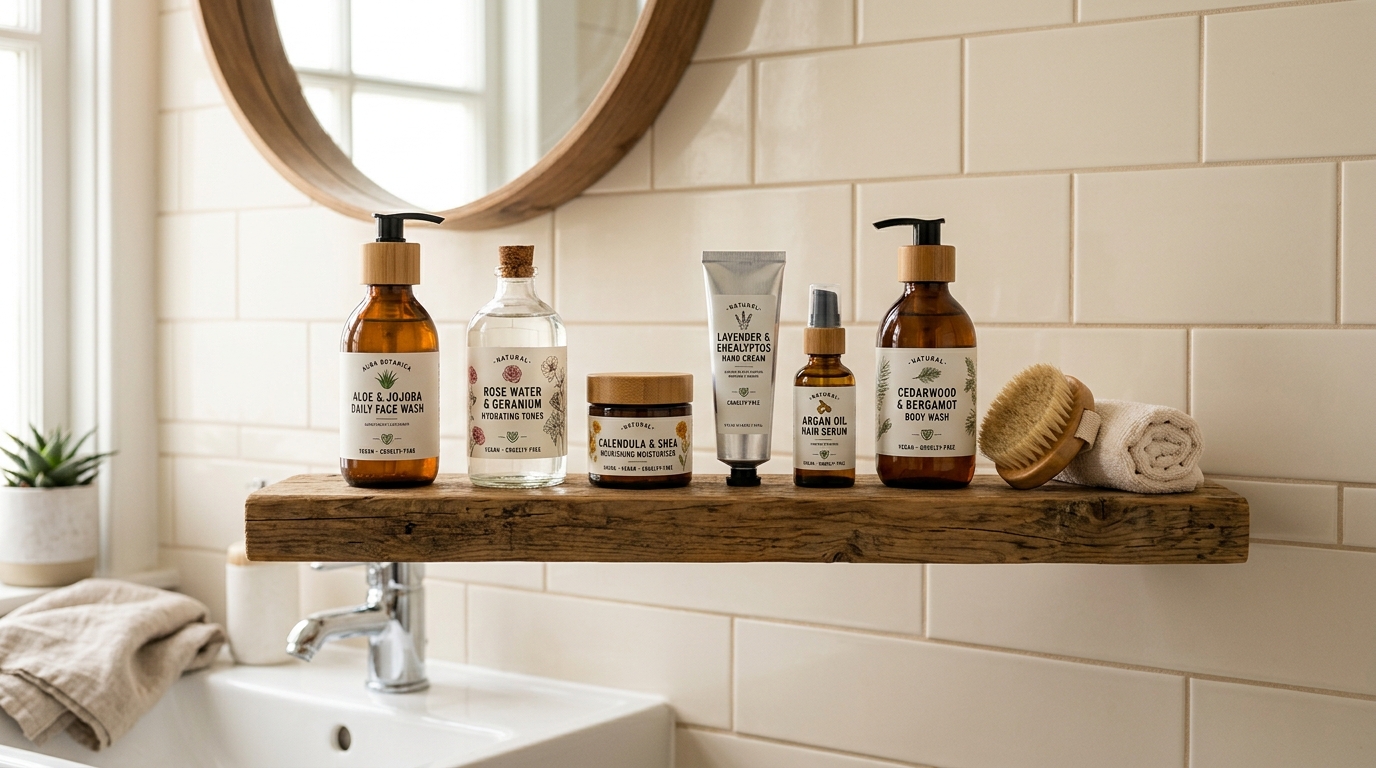
Natural Personal Care Products for Daily Use: Building the Routine That Sticks

Natural personal care products for daily use only deliver on their promise if the routine itself is simple enough to actually keep up. This is where most switches to natural products quietly fail — not because the products don’t work, but because a 9-step natural routine gets abandoned by week three in favor of whatever’s fastest, natural or not.
The goal here isn’t to replace every product in your bathroom at once. It’s to identify the handful of daily-use items where switching to a natural formula matters most, and build a routine simple enough that it survives a busy week.
Why Daily Use Is the Category That Matters Most
Products used once a week or occasionally — a clarifying mask, a special-occasion perfume — carry far less cumulative exposure than something applied every single day. A body lotion, a deodorant, a facial cleanser, and a hand soap used daily add up to meaningfully more skin contact over a year than nearly anything else in a routine. This is why prioritizing natural formulas specifically for daily-use categories, rather than trying to overhaul everything at once, is both the more sustainable and more genuinely effective approach.
Natural Personal Care Products for Daily Use: Categories to Prioritize First
Deodorant. Applied directly to skin daily, often on freshly shaved or otherwise more absorbent skin, deodorant is consistently one of the highest-priority swaps recommended by dermatologists focused on ingredient exposure. Look for aluminum-free formulas with a short, recognizable ingredient list.
Facial cleanser. Used twice daily and left on the skin, even briefly, a cleanser has more contact time than most people realize. A gentle, natural formula without sulfates avoids stripping the skin barrier, which ironically causes many people’s skin to overproduce oil in response. The Ayurveda Experience’s Blavana Body Cleanser is one option formulated specifically as a daily-use, paraben-free cleanser, designed to pair with a moisturizer immediately after.
Body lotion or moisturizer. Applied to large areas of skin, often right after showering when pores are more open, this is a high-leverage swap for reducing overall exposure to synthetic fragrance and preservatives. The Ayurveda Experience’s Blavana Body Lotion is a paraben-free option formulated specifically for daily use, worth trying if you’re looking for a genuinely fragrance-conscious formula rather than one that swaps synthetic fragrance for an equally strong “natural” scent.
Hand soap. Used multiple times daily by everyone in a household, hand soap is an easy, low-cost natural swap that affects the most people for the least effort — a genuinely practical starting point if you’re building a routine for a family, not just yourself. Look for a paraben-free, fragrance-conscious formula on Amazon, filtered by review count the same way we covered in the sweater post — hand soap sees enough daily use that fabric-quality-style scrutiny of reviews (skin dryness complaints, scent longevity) applies just as well here.
Categories Where Natural Isn’t Always Worth Prioritizing First
Not every product benefits equally from an immediate switch. Sunscreen, for instance, is worth researching carefully rather than defaulting to “natural” — some mineral sunscreens perform significantly worse on UV protection and blend-ability than well-formulated chemical sunscreens, and skipping sun protection because a natural option feels unpleasant to wear defeats the purpose entirely. Similarly, occasional-use items (special-occasion fragrance, a monthly exfoliating treatment) simply don’t carry the same daily exposure stakes, so they’re reasonable to deprioritize while you build the habit around genuinely daily items first.
Building a Routine That Actually Sticks
- Swap one category at a time. Replacing your entire routine in a single week is the most common reason natural switches don’t last — it’s disruptive, and any adjustment period (skin purging, different lather, different scent) hits all at once instead of being manageable.
- Keep a travel-size backup of your old product during the transition. This removes the pressure of an all-or-nothing switch and makes it easier to stick with the new product past the adjustment period, since you’re not stuck if a trip or busy week interrupts your routine.
- Pick products with the shortest genuinely necessary ingredient list, not the longest list of trendy natural-sounding additions — a routine with fewer, well-chosen products is easier to maintain long-term than one with many niche items that each require remembering a specific step.
- Reassess after 30 days, not 3. Most complaints about natural products not “working” come from judging them on the same timeline as products formulated with immediate-effect synthetic ingredients (like silicone-based hair smoothers), when many natural formulations show their real benefit with sustained use.
For specific product recommendations across categories, see our complete guide to natural personal care products.
Frequently Asked Questions
Do I need to switch every personal care product to natural at once?
Are natural personal care products always better for daily use than conventional ones?
How long does it take to adjust to a new natural routine?
What’s the easiest daily-use product to switch first?