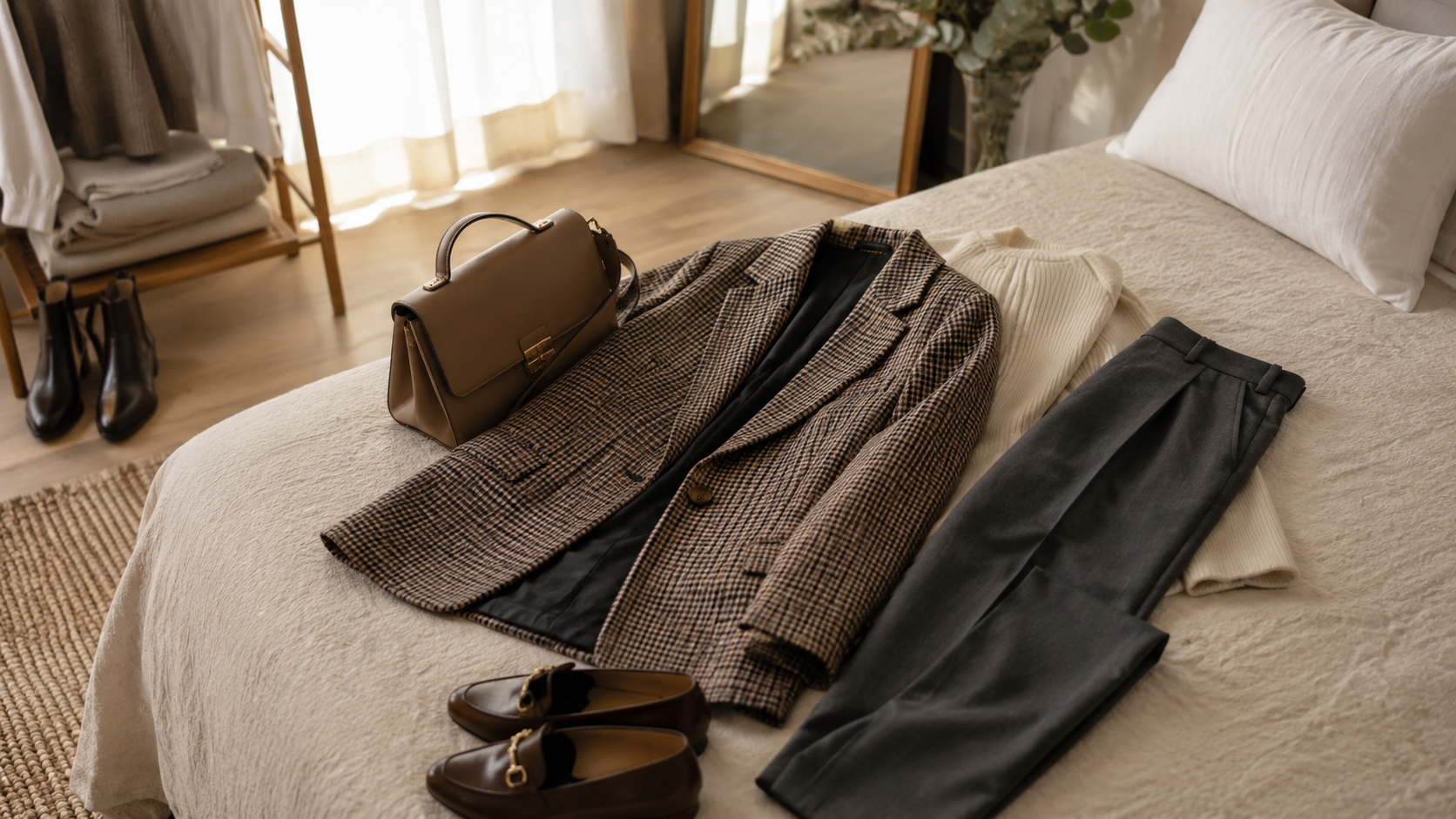
Business Casual vs. Business Formal: Which Should You Wear in 2026?

This post contains affiliate links. We may earn a small commission at no extra cost to you.
Business casual vs business formal isn’t just a style question anymore — it’s the question shaping how 41% of U.S. workers get dressed every morning in 2026 (Gallup, Casual Work Attire Is the Norm for U.S. Workers, 2026). This guide breaks down the real difference, when each still matters, and how to build both wardrobes without doubling your closet. For ready-made business casual looks, see our 10 work outfits that mean business.
Key Takeaways
- In 2026, 41% of U.S. workers dress business casual, and 51% of women specifically wear it most days, while just 3% of men regularly wear a suit (Gallup, 2026).
- Formally dressed job candidates were hired 97% of the time versus 14% for informally dressed candidates in a controlled hiring study (Texas State University).
- A capsule wardrobe of 15-20 quality pieces can cut work-clothing spending 30-50% versus buying trend pieces piece by piece (The Capsulist, 2026).
Business Casual vs Business Formal: What’s the Real Difference?
In 2026, business casual means blouses, dress pants, dressy jeans, or skirts, and it’s now worn by 51% of women in the workplace most days, while business formal — suits, structured blazers, closed-toe heels — is worn regularly by just 3% of men and a shrinking share of women (Gallup, 2026). The line between the two comes down to structure and formality signals, not just which pieces you own.
The clearest test isn’t the garment, it’s the finish. A blazer with visible topstitching and a soft shoulder reads business casual; the same silhouette in sharp wool with a structured shoulder reads business formal. Most closets already own both — they just don’t know which room each piece belongs in.
Business formal still has a place: client pitches, board meetings, interviews, and industries like law and finance lean formal by default. For everyday office days, business casual has become the practical baseline.
Why Are Fewer Offices Requiring Business Formal in 2026?

In 2026, over 60% of companies have updated their dress code policies in the past three years, and the direction is almost always toward more flexibility, not less (Business of Fashion, 2025). Hybrid work is the main driver — employees are dressing for fewer total office days, but the days they do show up carry more weight.
A January 2025 Monster poll found 43% of workers hadn’t worked in an office with a dress code in the past year, and among the 57% who had one, 63% described it as business casual (Monster, 2025). Isn’t it telling that most companies would rather write “use your judgment” than spell out a formal code?
Nearly 80% of professionals say they dress differently now than before the pandemic, according to research from workspace provider IWG covering more than 1,000 U.S. hybrid workers (IWG, 2025). That shift explains why business casual has absorbed pieces — dressy jeans, knit blazers — that would have been out of bounds a decade ago.
Readers who switched offices in the past year consistently describe the same adjustment period: the first two weeks they overdress out of habit, then quietly recalibrate once they see what the rest of the floor is actually wearing. Dress codes are rarely written down anymore — they’re absorbed by observation.
Does Formal Attire Actually Make You Look More Competent at Work?
Yes, more than most people expect. In a controlled hiring simulation, formally dressed candidates were hired 97% of the time compared to just 14% for identically qualified but informally dressed candidates (Texas State University, Perceived Competence as a Function of Attire in a Business Context). That gap shows up specifically in first impressions — interviews, pitches, new-client meetings — not necessarily in day-to-day office perception.
At the same time, comfort is pulling the other direction. A TK Maxx workplace survey found 47% of people now dress primarily for comfort versus 37% who prioritize looking professional, even though 45% — including 67% of younger millennials — say their work wardrobes have gotten more formal over the past year (TK Maxx workplace dress survey, 2025).
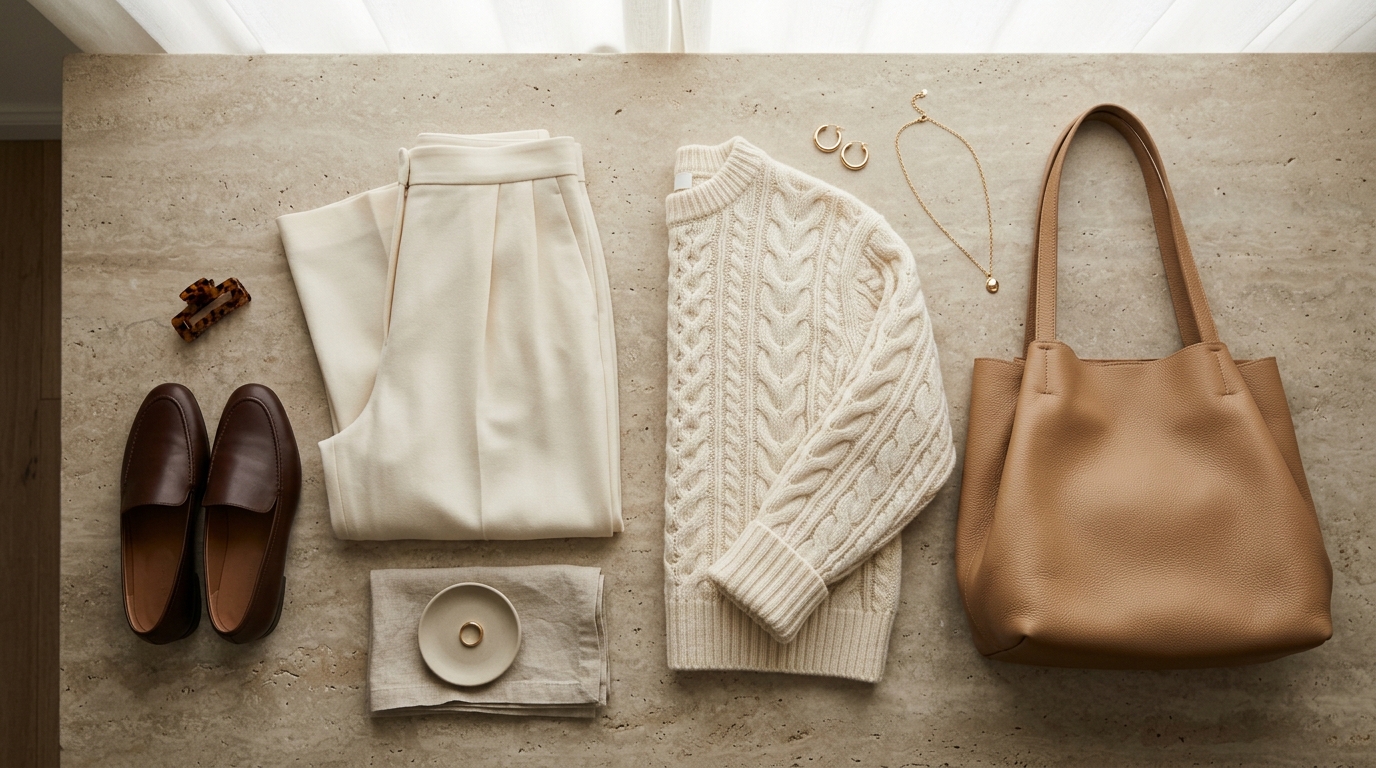
That tension isn’t a contradiction — it’s a scheduling problem. Save the formal register for the moments that are actually evaluative (interviews, pitches, first meetings with a new client) and let business casual carry the rest of the week. A structured blazer over a simple top solves both halves of that equation at once, and it’s a reasonable first purchase if you’re building a work capsule from an existing neutral accessories collection you already own.
What Should You Actually Wear for Each Dress Code?

When it comes to business casual vs business formal, tailored blazers, wrap dresses, structured blouses, and matching sets are the four pieces WhoWhatWear’s 2026 workwear coverage flags as doing double duty across both dress codes, styled sharper for formal days and looser for casual ones (WhoWhatWear, Office Outfit Trends 2026). Wide-leg and balloon-silhouette trousers are also trending, softening the formality of a full suit while still reading as intentional.

The cardigan has also earned a permanent spot in the rotation — no longer an office-chair backup layer, it now gets worn draped over the shoulders or as a standalone top (WhoWhatWear, 2026). Color is shifting too: soft blues, warm terracottas, and muted greens are replacing head-to-toe black and navy as the 2026 business-casual default.
| Piece | Business casual styling | Business formal styling | Budget pick |
|---|---|---|---|
| Blazer | Unbuttoned over a knit top | Buttoned, sharp shoulder, over a blouse | Shop tailored blazers |
| Wrap dress | Worn alone with flats | Layered under a blazer with heels | Shop wrap dresses |
| Trousers | Wide-leg, cropped hem | Straight or tapered, full length | Shop work trousers |
| Structured blouse | Tucked with jeans | Tucked with a matching set | Shop structured blouses |
| Cardigan | Draped over shoulders, worn open | Layered under a blazer | Shop work cardigans |
How Do You Build a Work Capsule Wardrobe Without Overspending?

Whether you lean business casual vs business formal most weeks, a 15-to-20-piece work capsule built around quality basics can cut clothing spend by 30-50% compared to buying trend pieces one at a time, because each item gets worn far more often (The Capsulist, Work Capsule Wardrobe, 2026). A $150 blazer worn 50 times over three years costs $3 per wear; a $40 fast-fashion version worn 8 times before it loses shape costs $5 per wear — the expensive piece is actually cheaper.
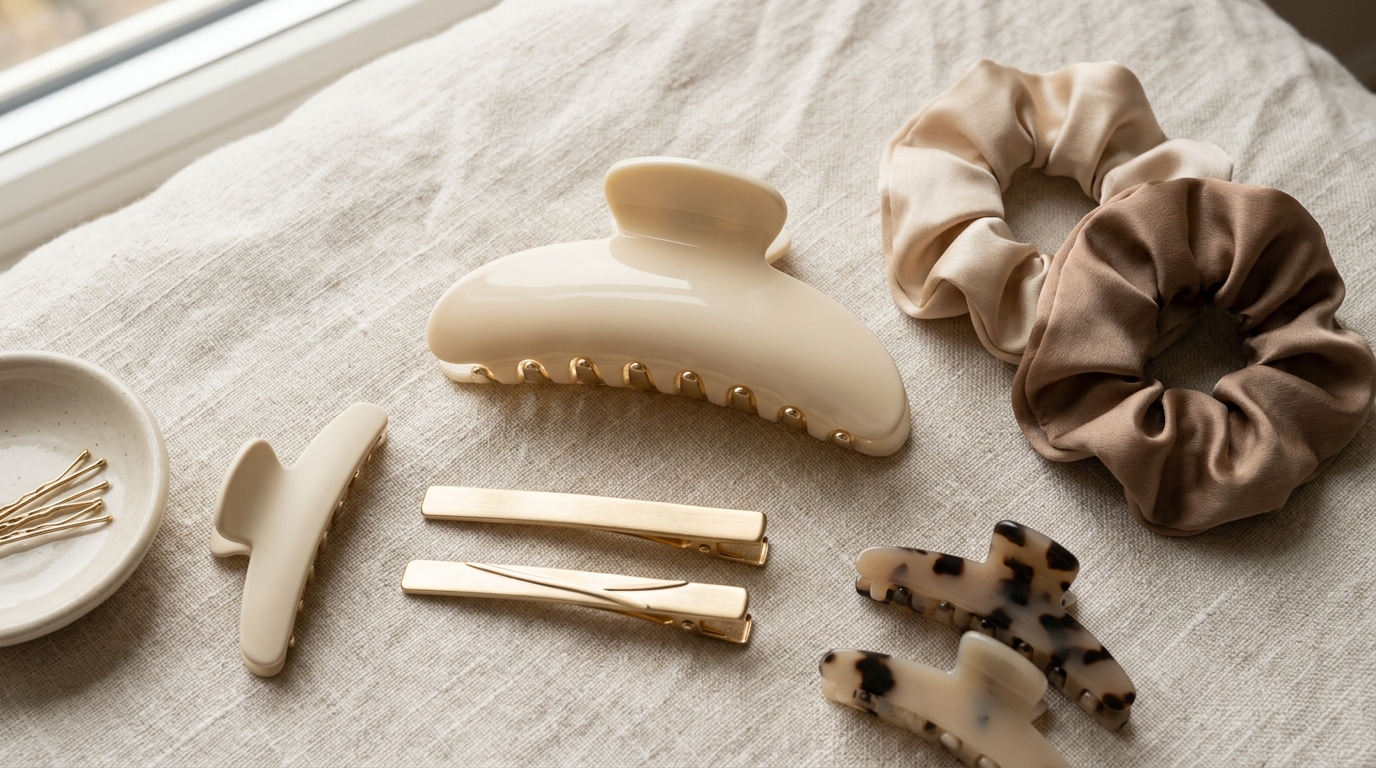
Start with one blazer, one wrap dress, and two pairs of trousers in neutral tones, then add the cardigan and a second blouse once those four pieces are in weekly rotation. For the accessories that stretch a capsule across both dress codes without adding bulk, our neutral accessories under $50 guide covers the belt, jewelry, and bag rotation that pairs with everything above.
Do you need two completely separate wardrobes?
No. Four to six pieces, styled two ways, cover most business casual and business formal needs without duplicating your closet. Save true duplication — a second blazer, a second pair of dress shoes — for after you know exactly how often formal days actually come up in your specific role.
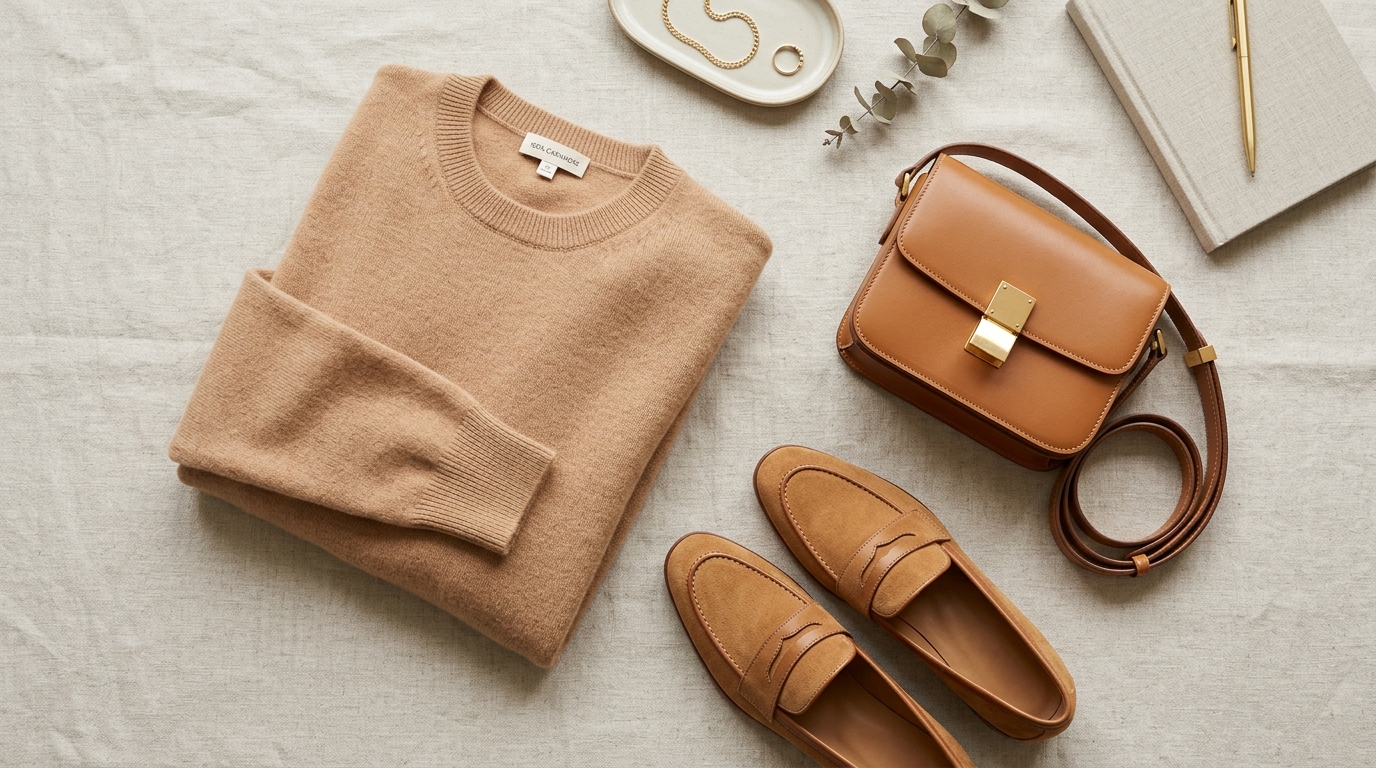
If you’re building out the sweater layer for cooler months, our luxury-looking sweaters under $50 guide covers pieces that read expensive enough for a business-formal day without the designer price tag.
Frequently Asked Questions
What’s the main difference between business casual and business formal?
u003cpu003eBusiness formal means a full suit or structured blazer-and-trouser set in a business-formal fabric, while business casual swaps the jacket for a knit layer and allows dressy jeans or skirts. In 2026, only 3% of men wear a suit regularly, versus 41% of all workers dressing business casual (Gallup, 2026).u003c/pu003e
Does what I wear to work actually affect how I’m perceived?
u003cpu003eYes, especially in first impressions. A hiring study found formally dressed candidates were hired 97% of the time versus 14% for informally dressed candidates with identical qualifications (Texas State University). Day-to-day office perception matters less than interviews, pitches, and first meetings.u003c/pu003e
How many pieces do I need for a work capsule wardrobe?
u003cpu003e15 to 20 quality pieces cover most business casual and business formal needs, cutting clothing spend by 30-50% versus buying trend pieces individually (The Capsulist, 2026). Start with a blazer, a wrap dress, and two pairs of trousers.u003c/pu003e
Why are more companies moving away from business formal dress codes?
u003cpu003eHybrid work is the main driver u0026#8212; over 60% of companies updated their dress code in the past three years, mostly toward flexibility (Business of Fashion, 2025). Nearly 80% of professionals report dressing differently than they did before the pandemic (IWG, 2025).u003c/pu003e
Conclusion
Business casual vs business formal isn’t really a wardrobe decision anymore — it’s a scheduling one. Default to business casual for the average office day, and reserve a formal blazer-and-trouser combination for interviews, pitches, and first meetings, where the data shows first impressions still run on formality.
Browse our Fashion & Beauty Finds category for more capsule-wardrobe breakdowns that carry across seasons and dress codes.
Read Also:
10 Work Outfits for women That Mean Business Without Trying Too Hard.
Old Money Style: How to Get the Look (Outfits, Rules and Key Pieces)